Secure the next quantum leap in wafer processing
Soloia specializes in custom-engineered motion systems and is accelerating your next generation roadmap.
Your next generation of products depends on motion systems, that you must master thoroughly. Competitors who have a better grasp of motion control bring their products to market sooner, secure design-ins, and dictate their customers' roadmaps.
Soloia operates at a structural control point in semiconductor capital equipment — where execution certainty decides who wins design-ins, and who funds them.
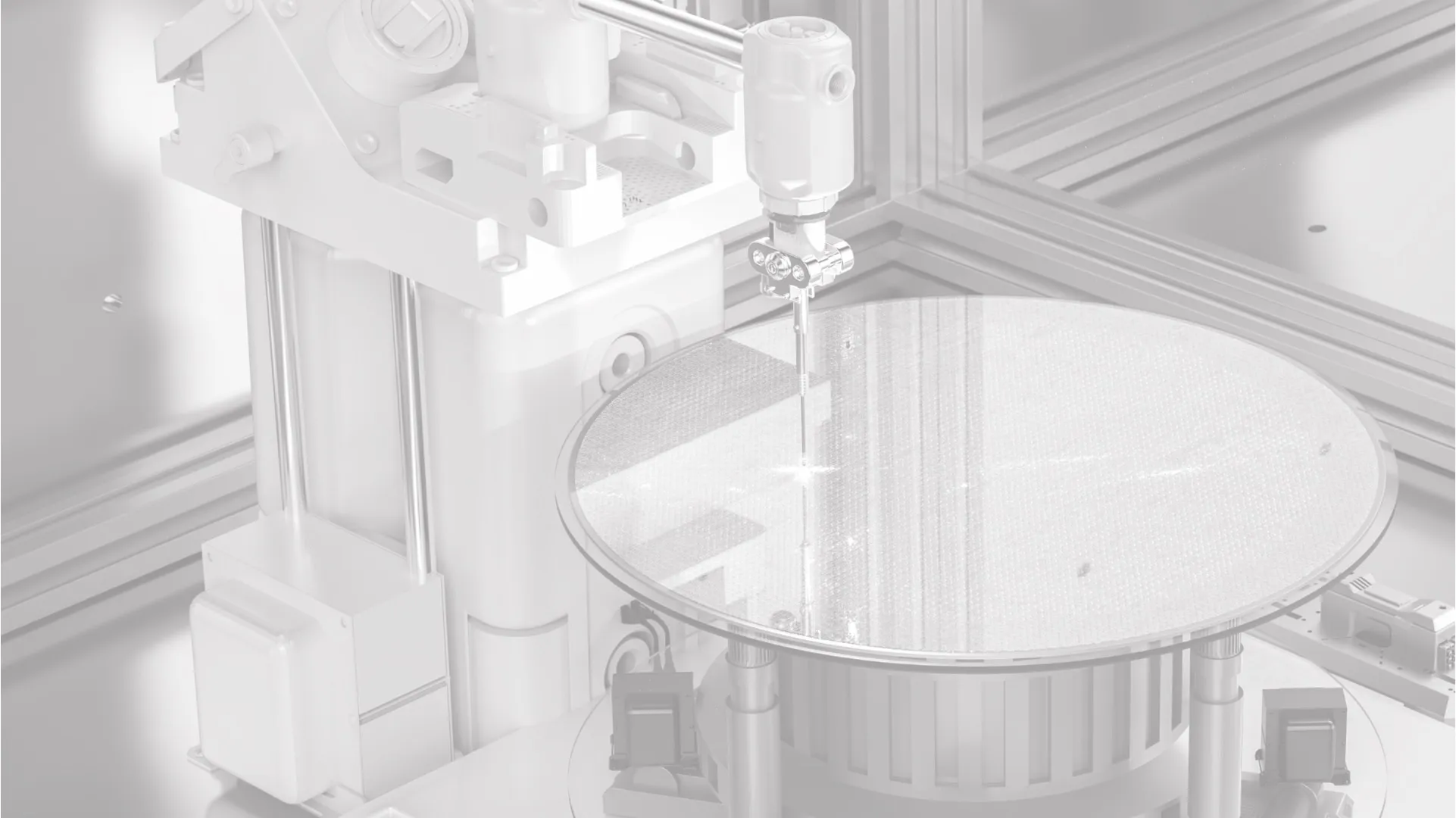
You build wafer-processing tools (dicing, grinding, polishing, inspection). Your next generation stalls when motion performance and qualification don't land on schedule.
Soloia delivers production-ready motion systems in 6–12 months — instead of 24–36.
Your fab ramp depends on tool roadmaps. When equipment programs slip, your ramp slips with them.
Soloia lets your equipment partners execute faster — with predictable qualification paths.
You want defensible positions in semiconductor capital equipment, where entry barriers are set by accumulated know-how, not capital alone.
Soloia holds that control point: fastest time-to-market at the lowest development risk.
Soloia combines validated air-bearing motion know-how with predictive simulation to deliver complete, qualification-ready motion systems.
The traditional loop — prototype → test → redesign → re-test — burns 18–36 months and creates binary qualification risk. Soloia simulates first and enters qualification with predictable performance.
You don't assemble bearings, controls, and integration across vendors. You get one validated system tuned to your throughput and accuracy targets.
The advantage isn't a component — it's the underlying capability, and it's protected.
Integrated air-bearing systems reach up to 2,500 m/s² acceleration — about 10× comparable designs — with accuracy down to the sub-nanometer range at 400 m/s² (40 g) for ~30% higher throughput potential.
Simulation eliminates most physical iteration loops, compressing 24–36 months of development into 6–12 — and starting qualification far earlier.
AeroLas' patent portfolio spans air-bearing fundamentals, motion-control integration, and simulation methodology — protecting the capability, not just parts.
AeroLas is the single source of speed-and-accuracy motion systems to the industry's leaders — mastering motion in dynamics + accuracy is the entry key. Their feedback inspired the spin-off of Soloia.
Trusted since 1999 for series production of unique, one-of-a-kind machinery.
OLED manufacturing relies on an annealing process built around an AeroLas motion system.
Next-generation wafer-inspection machinery is built using AeroLas technology and know-how.
Leading global chip-production machinery companies rely on AeroLas technology across the entire value chain.
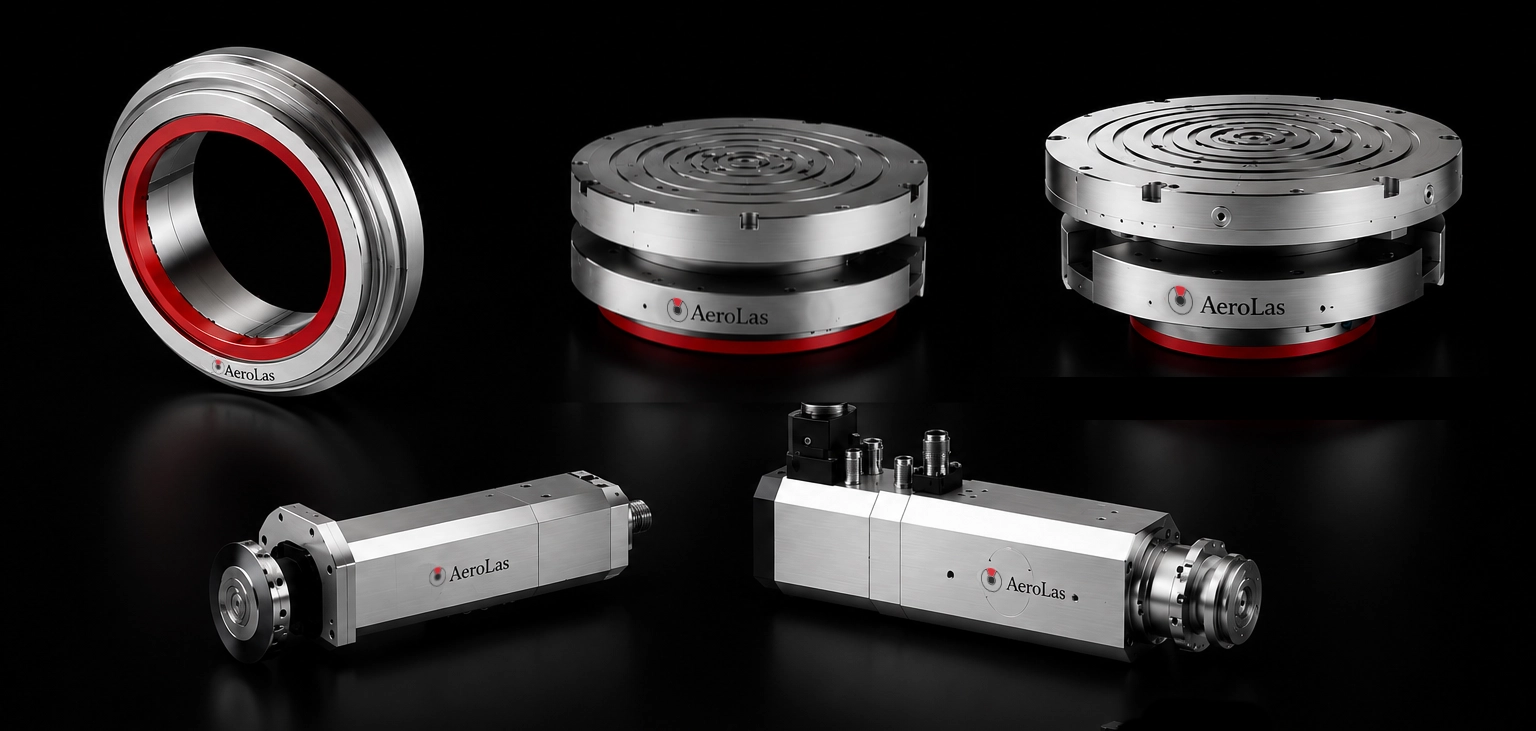
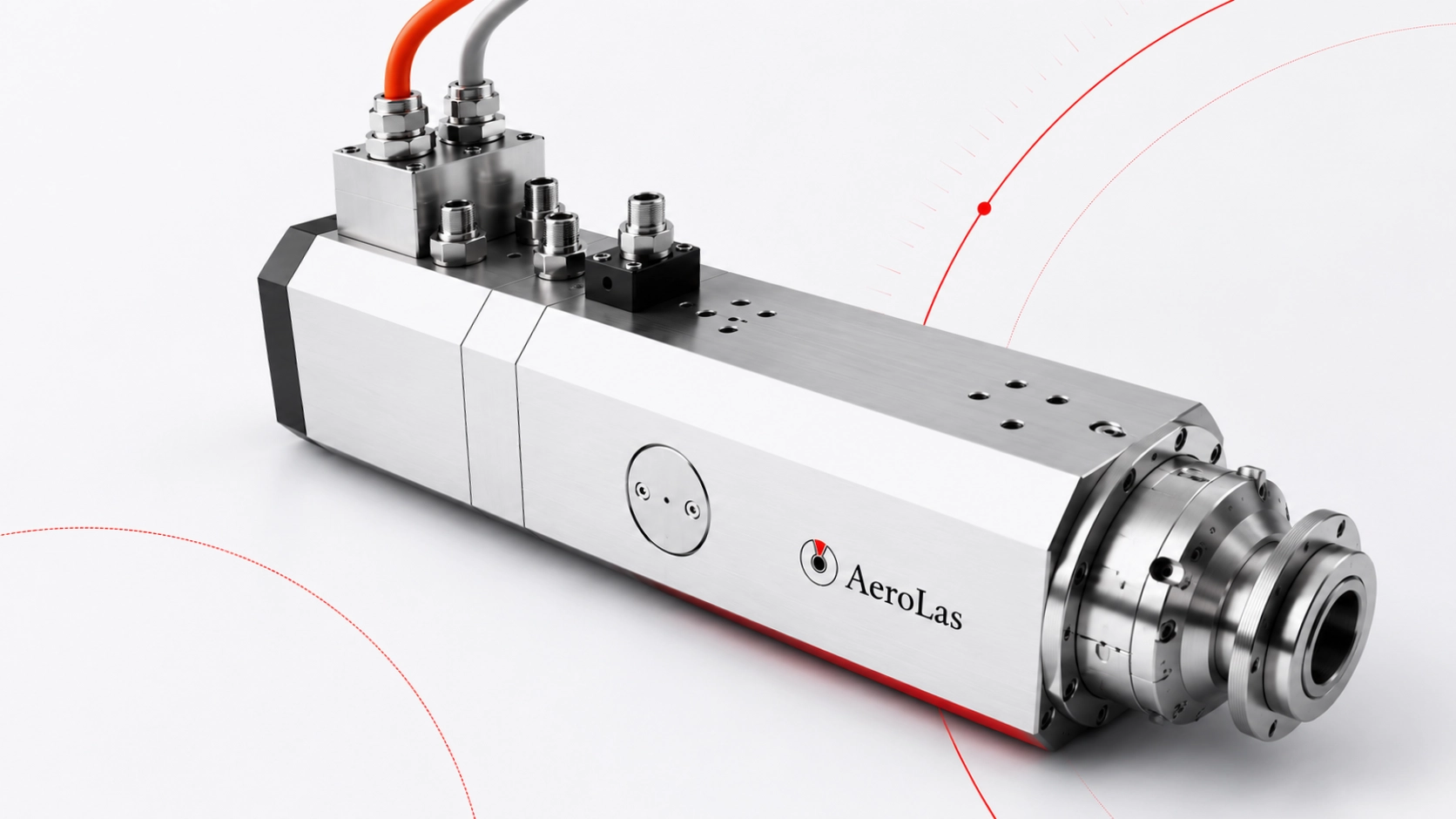
AeroLas has engineered ultra-precise, contactless air-bearing motion systems for over 25 years, holding a market-leading position across demanding industrial and aerospace applications.
Soloia is how that capability enters semiconductor wafer processing: the same air-bearing fundamentals and 100+ patents, now paired with predictive simulation to collapse development timelines the industry treats as non-negotiable.
The result is a focused company at a structural control point — with the engineering heritage to back execution certainty, not just promise it.
Sub-nanometer precision at high speed compresses development timelines by 50–70% across semiconductor and precision-manufacturing applications.
Equipment makers who locked in motion partnerships earlier are already shipping next-generation machines. Wait 12 months to start this conversation and you're 36 months behind market leaders.
Soloia works best where motion performance gates roadmap execution.
Yes. Soloia addresses a structural control point with long-term leverage — enabling equipment OEMs to capture margins in a concentrated market where entry barriers are defined by execution certainty and accumulated know-how.
Soloia operates as a strategic enabler. Collaboration models range from technology partnerships to scalable platform integration and equity participation, depending on roadmap requirements and strategic objectives.
Traditional motion-system development requires 18–36 months of iterative prototyping. Soloia's proprietary simulation tools enable production-ready designs with predictable performance in significantly shorter timeframes, eliminating trial-and-error and reducing qualification risk.
No. The platform is designed for leverage across multiple wafer sizes, process generations, and adjacent domains. The simulation foundation enables rapid adaptation to new requirements without starting from zero.
Soloia builds directly on AeroLas' 25+ years of contactless air-bearing motion engineering and its 100+ patents, applying that capability to semiconductor wafer processing.
All initial discussions are treated as confidential by default. Soloia operates under strict NDAs when discussing roadmap-sensitive topics.
If your next tool generation is gated by motion performance, let's validate timeline & fit, clarify the integration pathway, and define next steps — under confidentiality.
Focused discussion on roadmap objectives and execution constraints — no generic demos.
Validate simulation capability against your performance and qualification requirements.
Evaluate partnership or investment pathways that protect qualification timelines.
Michael leads AeroLas and the spin-out Soloia with a vision to bring chip manufacturing to the next level with air-bearing motion systems — driving the transition from niche air-bearing solutions into high-growth markets.
He has steered the company since its foundation in 1997 and is the public face of its mission to drive performance leadership through product innovation.
With over 20 years of experience across industrial, telecommunications, high-tech, and aerospace sectors, Hans-Friedrich bridges business strategy and technological execution.
Educated in computer science (James Madison University) and business (EBS, St. Gallen), he brings strong expertise in digital transformation, corporate finance, and operational excellence.
Thomas is an engineer at heart and a market-builder by trade. His passion is to bring innovations to market and empower technology companies to increase revenue, profitability, and value.
He tackles the common growth challenges in tech commercialization and works hard to turn technology into traction.